With colder temperatures arriving, now is the perfect time to prepare your home for winter. Simple improvements can help reduce heat loss, improve comfort, and lower your energy bills, especially since heating accounts for about 61 per cent of the average home’s energy use in Canada. Making a few upgrades before the temperatures drop can help keep warm air inside, minimize drafts, and reduce unnecessary strain on your heating system.
Here are four practical ways to winterize your home and maximize your energy savings.
Seal hidden leaks
According to Natural Resources Canada, air leaks around windows, doors, and foundations are among the leading sources of heat loss in Canadian homes. One of the most effective strategies is comprehensive air sealing—using weatherstripping, caulking, and foam gaskets to block leaks around windows, doors, electrical outlets, and pipes. Professional blower-door tests can pinpoint hidden leaks for maximum efficiency.
To identify leaks, you can:
- Perform a “smoke test” using incense near baseboards, vents, light fixtures and electrical outlets to see if air is moving. A strong leak will make the stick glow brighter and blow the smoke away, while small leaks will puff the smoke in a distinct direction.
- Run your hand around windows and doors to see if you can feel cold air entering.
- Check unfinished basements for gaps around pipes and wiring.
Even small leaks can significantly increase your heating costs and reduce overall home comfort.
Invest in a programmable or smart thermostat
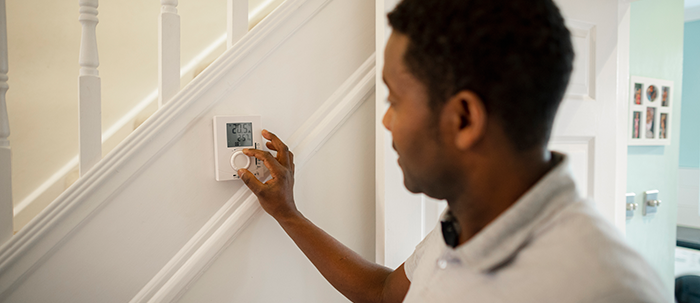
Smart and programmable thermostats allow you to automatically lower the heat when you’re asleep or away – one of the most effective ways to save energy. According to Natural Resources Canada, lowering your thermostat by just 1°C (2°F) for eight hours can cut your heating energy use by about 2%. If you’ll be away for more than three or four hours, it’s worth turning down the temperature. However, avoid setting it below 17°C (63°F) to prevent moisture buildup in exterior walls. For longer absences, such as a week or more, you can lower it further—but only if you keep humidity levels under control.
Modern thermostats also:
- Adjust automatically based on routines
- Connect to your smartphone for on-the-go control
- Track energy use to help you reduce waste
This small upgrade can make a noticeable impact on monthly heating bills.
Tune up your furnace and water heater
It’s best to schedule your inspection in the fall to ensure your furnace lasts longer and saves you energy. Also, change your filters at least twice each winter to improve both energy efficiency and air quality. While you’re at it, wrap your water heater in an insulating blanket. The energy it takes to heat water around the clock can make up about 20 per cent of your electrical bill! Read more about how to tune up your heating system in our blog post.
A seasonal tune-up should include:
- Cleaning burners and removing dust buildup
- Checking for carbon-monoxide leaks
- Replacing or cleaning furnace filters
- Inspecting vents and ductwork
Your water heater also works harder in colder months. To reduce energy use:
- Insulate any exposed hot-water pipes
Run ceiling fans in reverse
Running your ceiling fan clockwise helps push warm air, which naturally rises, back down into your living space. When fans run in reverse at a low speed, they circulate warm air without creating a cooling breeze. This quick adjustment takes seconds and can provide steady warmth throughout the season.
Protect your property with Residential Homebuilders Insurance
Even with cold-weather preparation, unexpected issues, such as frozen pipes, heating failures, or weather-related damage, can still occur. With the right insurance and by following the tips above, you can be better prepared for winter. To learn more about how you can protect your home, visit our Residential Homebuilders Insurance page today.
This blog is provided for information only and is not a substitute for professional advice. We make no representations or warranties regarding the accuracy or completeness of the information and will not be responsible for any loss arising out of reliance on the information.