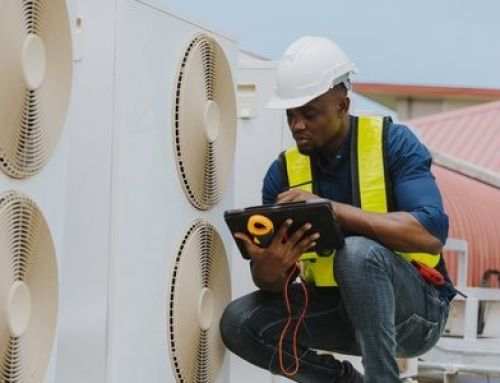
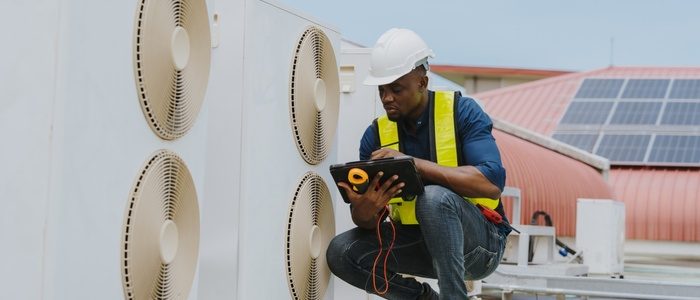
Canadians rely on HVAC workers to keep them cool in the summer and warm in the winter. But HVAC is complex, intricate work that requires technical expertise — which means it comes with several risks.
Whether you work on residential or commercial properties, your clients rely on you to install, repair, or maintain their heating, ventilation, and air conditioning (HVAC) systems. But you also need to protect your business from risks, such as property damage and on-site injuries. That’s where insurance can help.
So, who needs HVAC insurance? If you’re in the business of installing, repairing, or maintaining HVAC systems — whether you’re a commercial HVAC contractor, residential HVAC contractor, HVAC repair technician, or HVAC subcontractor — having specialized insurance can help you protect your business.
Why do HVAC contractors need insurance?
First off, many of your clients will ask for proof of insurance before hiring you for a job. Insurance gives your clients peace of mind, but it should also give you peace of mind: The right policy can help protect your business by defending you against allegations of deficient work that results in injury or property damage, and by indemnifying you if you’re found legally liable for such property damage or bodily injury to a third party.
You regularly work on jobsites — whether at a client’s residential home or commercial property — so that puts you at increased risk for these types of claims. For example, what if a technician on a ladder accidentally drops a tool, which injures another person or damages the client’s property? Or if they accidentally knock a sprinkler head resulting in a cascade of water onto your customer’s property?
As an HVAC contractor, you also rely on your tools, many of which are expensive to replace or repair if lost, stolen, or damaged. For highly specialized or custom-designed tools, there could be a long lead time for parts replacement or qualified repairs, which could result in a loss of productivity or an inability to meet deadlines.
Equipment could also malfunction, which poses a liability hazard (such as an electrical malfunction in a battery recharger that starts a fire). But you’re also at risk of professional liability, even after you’ve completed a job. If a client accuses you of negligence — say, an HVAC system you installed sparks a fire, or a water heater causes a leak — you could be sued for the client’s related financial losses.
As an HVAC contractor, you also rely on your vehicle or fleet to transport you and your technicians and equipment to jobsites. That means you’re at risk of collisions, tool theft, and other vehicle-related hazards. If you’re a smaller operation, you might rely on a personal vehicle for work, and you may let other employees use that vehicle — but that puts you at significant risk, since personal vehicles aren’t typically covered by a commercial auto policy.
Even if you do everything by the book, sometimes mistakes happen, which is where HVAC insurance comes in.
What type of insurance do HVAC contractors and owners need?
HVAC risks can include liability claims and lawsuits, out-of-pocket costs, business interruption, productivity loss, and reputational damage. That’s why a customized HVAC insurance policy is so important.
An HVAC insurance policy should include the following:
- Commercial general liability (CGL) insurance helps to protect your business from claims of property damage or bodily injury to a third party when working on a jobsite. So, in the aforementioned example of a worker on a ladder dropping a tool, this would help protect the business against related claims. Also, it is typically a contractual obligation on your part to obtain CGL insurance.
- Commercial property insurance can help protect your office and its contents, including tools and equipment, from natural hazards, theft, and vandalism.
- Tools and equipment insurance can help cover the costs of replacing or repairing items that are lost, stolen, or damaged while you’re in transit or on a jobsite.
- Installation Floater covers you for the value of the work (materials and labour) you’ve installed at the jobsite from natural hazards, theft and vandalism, as well as materials you are transporting to the jobsite.
- Business interruption insurance can protect your business (such as covering rent and payroll, or finding another temporary location) if you can’t work due to a covered loss.
- Commercial auto insurance can protect you and your employees, as well as any passengers, whether you use a personal vehicle for work or own a fleet of vehicles. For example, a commercial policy could help to cover medical expenses, lost wages, and replacement car coverage if you or your employed drivers were injured in an accident. Don’t rely on your personal auto policy since it won’t protect you from certain work-related risks and losses.
- Professional liability coverage (sometimes referred to as Contractors errors and omissions, or E&O, insurance) can protect your business against claims of errors, professional negligence, failure to meet deadlines, and breach of contracts.
- Pollution liability coverage protects you against environmental damage and clean-up costs, which is important for HVAC contractors who work with toxic or semi-toxic materials.
Stay safe with HVAC insurance
No matter how diligent you are, you may still have to deal with an equipment malfunction, a flood in your office, or accidental property damage on a jobsite. To learn more, visit our HVAC insurance page today.
This blog is provided for information only and is not a substitute for professional advice. We make no representations or warranties regarding the accuracy or completeness of the information and will not be responsible for any loss arising out of reliance on the information.